art | design | fashion

Wednesday, February 21, 2007

portland's wurst gallery

Portland has great art galleries and the wurst gallery looks like it could also be its most fun:


Check out their current exhibit : the wurstminster
artists were invited to reserve a dog breed on a first come, first served basis. the only requirement was that the artist attempt to capture the look and spirit of their chosen breed in their own unique way. a portion of the proceeds from this show will be donated to DoveLewis animal hospital in portland, oregon.
I just wish I liked the Wire Fox Terrier better. The Norwich and the Scottie are great however.


I like everything about Portland: great art, great music, great lit, and the best bookstore in the world. It just rains too damn much. I couldn't take it. I'm not a jolly enough person to live with such persistent gloom. Under those conditions you have to have a sunny disposition in order to prevent yourself from perishing of grief.


Tuesday, February 20, 2007

saint-tropez and modern art

Saint-Tropez (Municipality, Var, France)
In 1892, the painter Paul Signac (1863-1935), one of the leaders of the Pointillist school, sailing on his yacht Olympia, discovered the small fishers' village of Saint-Tropez.

Paul Signac. The Red Buoy, Saint-Tropez, 1895 Musée d'Orsay

He bought a house that he named La Hune (lit., the top [of a ship]) and transformed into his studio, where he invited his friends, such as Cross, Matisse, Derain and Marquet. Saint-Tropez became a main center of painting avant-garde of the early XXth century.

Henri Matisse, Luxe, calme et volupté (1905), Musée d'Orsay, Paris

The Museum of Annonciade
The Museum of Annonciade, housed since 1955 in a former chapel located on the port of Saint-Tropez and abandoned during the French Revolution, shows 56 paintings, dating from 1890-1950, bequeathed by the local collector Georges Grammont. The collection is fairly small but includes only masterpieces by painters from the Pointillist, Fauvist and Nabi schools. Among the painters exhibited there are André Derain, Henri Matisse, Pierre Bonnard, Georges Rouault, Georges Braque, Georges Seurat, Henri-Edmond Cross, Paul Signac, Raoul Dufy, Félix Vallotton, Albert Marquet, Aristide Maillol and Edouard Vuillard.


Paul Signac: Port St. Tropez, ( 1899)Musée de l'Annonciade, St. Tropez

Albert Marquet, Le port de Saint-Tropez (1905), Musée de l'Annonciade, Saint-Tropez

Pierre Bonnard , Le Port de Saint-Tropez, 1914, Saint-Tropez, musée de l'Annonciade

Paul Signac: French neo-impressionist painter 1863 - 1935
Artist's biography and a collection of his paintings
Recommended reading: Saint-Tropez: The Rise of an Artist Colony (an excellent illustrated online blog/article
Online Resources for Paul Signac:
Glossary:

Impressionism (n)/ Impressionist (adj)
A progressive art movement that originated in France in the late 19th century. Impressionist painters wanted to capture the rapidly changing modern world and the fleeting moods of nature. Impressionism relied on optical blending to depict the fluctuations of light and consisted largely of views of everyday middle-class life in the city and countryside of France.

Claude Monet (French, 1840-1926) Garden at Sainte-Adresse, (1867) The Metropolitan Museum of Art, New York. "Monet’s Garden at Sainte-Adresse depicts the artist’s aunt, father, and cousin relaxing on a seaside terrace."

Postimpressionism (n)/ Postimpressionist (adj)
The French artistic style that followed Impressionism. Such artists as Georges Seurat, Paul Cézanne, Vincent van Gogh, Paul Gauguin, and Henri de Toulouse-Lautrec pushed beyond the Impressionist emphasis on the appearance of nature, stressing instead qualities such as emotional expression and the formal structure of underlying objects. Postimpressionism led to a variety of bold new styles, including innovative uses of color and brushwork that sometimes bordered on abstraction. (Click here to go read Gauguin's Tahitian Interiors : my post from Monday February 19, 2007)

Pointillism (n)
A theory and technique of applying small strokes or dots of color to a surface so that from a distance, they blend together; also called Neoimpressionism or Divisionism

Georges Seurat, Sunday Afternoon on the Island of La Grande Jatte / Un dimanche après-midi à l'Ile de la Grande Jatte (1884-86) Art Institute of Chicago

Art Institute of Chicago
Art Access Glossary

Monday, February 19, 2007

gauguin's tahitian interiors

Merahi metua no Tehamana
(Ancestors of Tehamana /Ancêtres de Tehamana)
1893 Art Institute of Chicago
Gauguin's Tahitian interiors are marked by elaborate patterns on walls and fabrics; often every surface is covered a complex mix of pattern and color as with the two paintings above (Ancestors of Tehamana) and below (Nevermore). In these two interiors we see richly symbolic spaces made up of layers of patterns, sculptures, and natural objects such as flowers, fruits and animals.

Nevermore, O Taiti / Plus jamais (1897)
Courtauld Institute Galleries, London

Ordinary objects are shown to have with spiritual significance, such as the fan in Ancestors of Tehamana.

Gauguin's repeated use of certain objects such as mangos, which have such powerful symbolic associations with sex and fecundity makes us attentive to the mangos in the foreground of What's New? and Woman Brooding (below).

Tahitienne (Sur La Plage) / Tahitian Women (On the Beach
1891, Musée d'Orsay, Paris

Interior and exterior spaces are not distinguished from each other by the use of naturalistic choices of color or light. It seems that Gauguin took his famous painting of his two women on the beach, Tahitienne and re-created it as an interior painting in What's New? There is very little to mark the change with the exception, perhaps, of some shading for floor boards and a hightened saturation that changes the coloring of the sand.


Parua Api? / What's New? / Quoi de neuf?
(1892) Gemaldegalerie Neue Meister, Dresden


In other interiors surfaces are covered--floor to ceiling with a single bright swath of color, as with the bright mango-colored floor below (Brooding Woman) and, conversely, the world of nature is a riot of colors, sometimes arranged in ritualistic patterns. The intensity of the spiritual world associated with nature often led Gauguin to create otherworldly images of the Tahitian landscape using bold, rich but unnatural colors, as seen in the painting The Day of the God below:

Mahana No Atua (Day of the Gods) 1894, Art Institute of Chicago

While the world of nature can be depicted in bright unnatural patterns and colors, inner spaces are sometimes bathed in more natural hues, as in Not Working (below). An almost identical space in Woman Brooding is bathed in the bright colors of blue and mango -- colors of the dress worn by the woman in Not Working.

Eiaha Ohipa Not Working Pas de travail (1896)
Pushkin Museum of Fine Art, Moscow

Te Faaturuma Woman Brooding (1891)
Worcester Art Museum
Note how the canvases mirror each other in the frame of the door, the dog sitting guard, and the figure in the distance. The figures appear to be (perhaps?) the abandoned wife in the white dress catching view of her husband with another women, and the unfaithful husband returning to his unhappy wife.

To varying degrees, like Gauguin's exterior imagery, his interior spaces are fantasies. These interiors are fantasies haunted by two things: the first is Gauguin himself. As brilliant as his work is, and it is brilliant, it is also awful. Some of it is unspeakably painful. He behaved in ways that were monstrous. That his work can give testimony to this behavior is not a redemption of him as a human being but it is of him as an artist. And everyone knows those are not always the same.


Manaò tupapau /L’esprit des morts veille (1892) Albright—Knox Art Gallery.
Contes barbares, (1902) Marquises Essen, Museum Folkwang.
From his earliest arrive in Tahiti to his final death in the Marquises his artistic motivations were always twisted into his personal demons and desires and as a result he left behind him a swath of destruction in the communities where he lived. While it may be true that our current ideas about decency (whatever they may be) may not be applicable to middled-aged French men and Polynesian girls a century ago, there is no greater testament to their misery than Gauguin's own paintings. Historical materials also provide evidence that there are certain ideas about human dignity and rights that are universal.

Finally, Gauguin's Tahitian paintings are in a sense all interior spaces haunted by the reality of Tahiti itself. Tahiti was not Gauguin's tropical escape from the world -- an unspoiled paradise -- but was becoming an increasingly modernized colonial state. Tahiti was the center of French Polynesia, an important trade center. In addition, most of the native peoples had been converted to Christianity by missionaries.

Ta Matete (We Shall Not Go to Market Today)
Jour de Marché
(1892)
Kunstmuseum Basel

The world that Gauguin paints is no less powerful for being imagined. Indeed it is all the more significant for its being the dream vision of a created by mad Robinson Crusoe driven to find the last island with a Garden of Eden until only finding populations whose decline he can only hasten with his own debauchery ultimately ending in alcholism and syphilis. This is the European avant-garde artistic statement of the primitive par excellance. Not even Picasso could surpass Gauguin when it came to that.

the basics:

paul gauguin b. 1848, Paris; d. 1903, Marquesas Islands

National Gallery of Art, Washington DC

Terminology :
  • Primitivism : definition from the Tate Collection online glossary
  • Expressionism : definition from the Tate Collection online glossary
Additional museum collections :
Additional online resources :
Recommended reading :
Gauguin & Van Gogh (because it always comes back to Van Gogh):
Recommended reading (available online):
Just plain recommended:

Lust for Life : the classic 1937 novel written by Irving Stone and based on Van Gogh's life.
Lust for Life : the classic 1956 film based on Irving Stone's novel, starring Kirk Douglas, Anthony Quinn and directed by Vincente Minnelli.
Saturday, February 10, 2007

if not a room then a shrine

. . . and an entire city

or some history on the devotion of space to domesticated cats .

Bastet

Note: portions of this text have been excerpted from: http://www.moggies.co.uk/bastet/bastet.html

Bast is an ancient Egyptian goddess, the Sacred Cat and her name means devouring lady. She is depicted as having the body of a woman and the head of a domestic cat. Her worship began around the year 3200 BCE during the second dynasty in northern Egypt and her city is Bubastis. There, and in many other ancient cities, Egyptians celebrated Bast's feast day, October 31st.


Though the cat-headed goddess Bast was revered and loved throughout Egypt from the earliest of times there were several cities sacred to her cult and which hosted several large, important and influential temples.

Among the dozen or so cities important to the Bast Cult, none was more important or holy than Bubastis. During the Bubastite period (22nd dynasty), cat cemeteries became popular, and a huge profusion of cat amulets were being made. Cats were mummified and ritually buried.


FUN FACT: You can still purchase Bastet amulets including one with the image of a mummified cat:

Click on image above to order one from the Freer Sackler shop. It is the perfect pendant to wear when you want to tell people: "I like cats and I'm kind of sick in the head."
In 640 AD Bubastis was still alive and people were still worshipping cats there.

Cats were very sacred animals to the ancient Egyptians. They held a high, honoured position in many households and were more important even than humans. Cats were demigods in ancient Egypt. Anyone caught harming or killing a cat, even by accident, was punished by death, for cats guarded the royal granaries keeping them relatively free from vermin which threatened the food supplies.

She is also the goddess of shoppers:
the handbag is an important object in Bastet rituals.


The cult of Bastet was centered in Bubastis (located in the delta region, near modern- day Zagazig) from at least the 4th Dynasty. The famous Temple Ruins of Bast at Bubastis (Per-Bast in Tameran, today Tell-Basta). The sacred enclosure consisted of a grove of tall trees (the only one to be found in an Egyptian temple) holding the shrine of the goddess within.

The temple was full of cats who were carried around in baskets and ritually fed.


Once a year, a great festival was held in Bubastis to honour Bast, attracting devotees from all over the country. According to Herodotus, the original accidental tourist, upwards of 700,000 people attended.

(Heroditus. ii. 59, 60.):

"Temples there are more spacious and costlier than that of Bubastis, but none so pleasant to behold. It is after the following fashion. Except at the entrance, it is surrounded by water: for two canals branch off from the river, and run as far as the entrance to the temple: yet neither canal mingles with the other, but one runs on this side, and the other on that. Each canal is a hundred feet wide, and its banks are lined with trees. The propylaea are sixty feet in height, and are adorned with sculptures (probably intaglios in relief) nine feet high, and of excellent workmanship. The Temple being in the middle of the city is looked down upon from all sides as you walk around; and this comes from the city having been raised, whereas the temple itself has not been moved, but remains in its original place. Quite round the temple there goes a wall, adorned with sculptures. Within the inclosure is a grove of fair tall trees, planted around a large building in which is the effigy (of Bast). The form of that temple is square, each side being a stadium in length. In a line with the entrance is a road built of stone about three stadia long, leading eastwards through the public market. The road is about 400 feet broad, and is flanked by exceeding tall trees. It leads to the temple of Hermes."

Further information on Bastet:

Bastet was strictly a solar deity until the arrival of Greek influence on Egyptian society, when she became a lunar goddess due to the Greeks associating her with their Artemis. Dating from the 2nd Dynasty (roughly 2890-2686 BCE), Bastet was originally portrayed as either a wild desert cat or as a lioness, and only became associated with the domesticated feline around 1000 BCE. http://www.egyptianmyths.net/bastet.htm

Because the Greeks equated Bastet with Diana and Artemis and Horus with Apollo, Bastet became adopted into the Osiris-Isis myth as their daughter (this association, however, was never made previous to the arrival of Hellenistic influence on Egypt). She is stated to be the mother of the lion-headed god Mihos (who was also worshipped in Bubastis, along with Thoth). She is depicted most commonly as a woman with the head of a domesticated or wild cat or lion, or as a cat itself. Article "Bastet" created on 03 March 1997; last modified on 26 May 1999 (Revision 2). 318 words. http://www.pantheon.org/articles/b/bastet.html © MCMXCV - MMVI Encyclopedia Mythica™. All rights reserved.

Wednesday, February 07, 2007

the fifth fable : flyovers

note: fables 1-4 are from my commentary on episode one of bravo tv's top design show (da bear and other fables) but this is a more generic statement so I moved here to the arts | design section

the fifth fable : flyovers

For the stylemakers on the coasts Chicago is just part of the big "flyover" world of non-culture between New York and Los Angeles. Or, with O'Hare aiport it is more of a "stopover": a place you don't want to bother with; you are just waiting to get out it of as soon as possible.

(What's missed is the other, older, vertical axis -- running down the center -- Chicago/New Orleans, the Mississippi River. It is a deeper, darker line but that is another story.)

Of course anyone who knows anything about architecture knows that Chicago is the most important architectural city in America.


If you don't know this, here's a place to start: 1871 Great Chicago Fire. After that try:
  • Birth of Skyscraper.
  • Columbian Exposition/Neo-Classical revival.
  • Prairie School.
  • Modern/International Style.
Chicago is also the center for furniture design. (The Merchandise Mart is a thing to behold.) It used to manufacture the most furniture but with union busting the industry went south. Now it is probably all done in Asia. However Chicago is still known for its custom furniture design.

And all that modernist design that people in LA and NY worship? Where do you think much of that came from?


(Also, while Chicago may not be at the center for fashion design, many consider it the best restaurant city in the country.)

People will go there for business conferences and tell me, with surprise, that they discovered it was a really amazing city. Like it didn't occur to them that this a place of international significance not just in manufacturing but in arts and design and culture. After New York and Washington DC it has musuems with the most established and largest collections.

I can play city booster but part of me also wants to keep things a secret, like the jazz clubs that are such gems that they would be overrun with tourists if they were in New York or LA. A lot of what I like isn't glitzy stuff. It is the city of neighborhoods. The entire lakefront is public property. And Wrigley Field is one of the last great parks but you have to be a native to really understand the Cubs. (They are different from the Red Sox.)

Although midwesterners are seen as a bit dopey compared to the smarter east coast and hipper west coast, in fact, Chicago is the home to the university that fosters the most intellecually intense and challenging environment of any place in the world. The University of Chicago is truly devoted to fostering the life of the mind. Even the Ivy League thinks those people are total dorks.

Saturday, January 06, 2007

calendar design

I've decided that if I don't have something substantial to write about I'll just use this space to showcase the designs I'm working on.

This is my calendar image for the year [click here or on the image to view item]. It shows all four of the seasonal fruit designs for this year. The arts and crafts designs were a hit so I'm planning to develop this line. [Go to the shop to see the selection.] I just wish they had a tea towel. I'll keep the pomegranates through February then switch to oranges in the spring. Berries for summer. Persimmons for fall. I will also provide a recipe for each new fruit. Click here for the mulled pomegranate cider recipe.

It's a mix of arts and crafts from both the 19th and 20th centuries: rough=hewn hand-made and and retro home-ec.

Wednesday, January 03, 2007

Saturday, December 23, 2006

Thursday, December 07, 2006

the arts and crafts movement


" The Arts & Crafts Movement was a rebellion of substance as well as style. Its power came from the conviction that art and craft could change people's lives. Its strong social and moral purpose has ensured its continuing relevance. Many guilds and workshops were set up which had a long lasting impact on communities. The work could be highly decorated but was often extremely plain. The roughness and simplicity of some work was shocking, one reviewer in 1899 referred to an Arts & Crafts piece as looking 'like the work of a savage'. However most pieces show a concern for and understanding of craftsmanship. The bright colours, rich patterns and textures of many pieces are visually stunning. " place holder -- more to come

arts and crafts style items

More shameless commerce from the kora in hell shop:

The items below are part of a series for the year illustrating four fruits of the seasons that will change quarterly over the year. The four different designs are shown in the calendar.


Tuesday, September 26, 2006

modernist fashion history

topics :


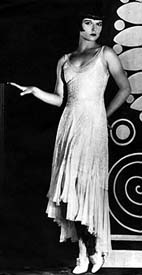
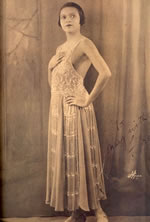
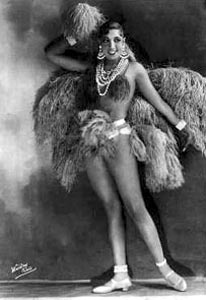
(Pictured: Louise Brooks, Florence Mills, Josephine Baker)
These new posts are all up but there are still some problems with links. I'm working on them now.

Saturday, September 23, 2006

orientalism in brief


Orientalism

Orientalism specifically describe a fashion trend in the first decades of the twentieth century but the word generally refers to all different kinds of phenomenon that involve Western (American and European, especially) interpretations of Eastern cultures that are often very imaginary, stereotypical, and based on ideas of western superiority.

Orientalism, as a concept of "what is the East" is as old as "what is the West." To put another way, the barbarian is invented by the civilized as a way of distinguishing themselves.

At any rate, the import of textiles and other commodities from the East dates back to the silk road and the very formation of Europe itself. Over the centuries its vogue had surged and ebbed with the fashions of the times and the exploits of explorers and empire builders.

The West's conceptions of “the orient” are not exclusive limited to Asia but extend to many other areas of the globe including the middle east, the south Pacific, parts of Africa, classical Greece and ancient Egypt, and even parts of Eastern Europe. The larger fascination with “ethnic” styles included orientalist styles, all “folk” cultures, and what was considered “primitive”cultures (i.e., anything not European).

Resources

Orientalism is not something that only happened in the past. It is as alive and well today as it ever was. For more information, especially as it relates to the important book by Edward Said (Orientalism, New York: Vintage, 1979) you can start with these resources:

1. start here for a general overview

2. then go here for a discussion of the term as used in Said’s book


paul poiret


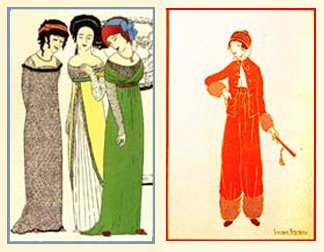
Paul Poiret is one of the earliest designers of the dress style for the modern "new woman": a slender style that loosely fit the body (the "Nouvelle Vague") which liberated women from the corset and allowed for greater freedom of movement. He was inspried by the stylings of ancient Greece as well as the Empire gown which elongated the torso and he was particularly fond of headscarves and turbans.

Poiret is also noted for a number of style innovations. His orientalist fashions can be seen in the kimono gowns (see above, the blue gown in the middle) and turkish robes and other styles that wrapped the body and hung losely in soft folds. He introduced harem pants which became all the rage when the Ballet Russe came to Paris.


His least appealing design is the hobble skirt, which was tight around the ankles. Why someone who promoted the idea of creating fashion that gave women more freedom created something as silly as the hobble skirt is something of a mystery.
(On left: in case she also wants her knees tied together a belt is helpfully provided.)

However, he later modified the design so that the skirt was split in the middle, with a gathered folds cascading down the middle.

His lampshade dress was another radical transformation in the architecture of women's fashion. It was also an item that worked well with his harem pants and modified (i.e. no longer hobbling) hobble skirt.
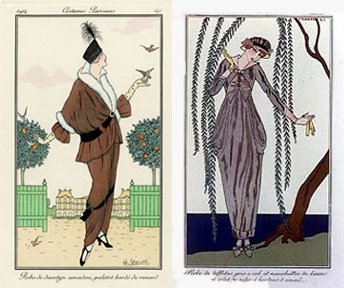
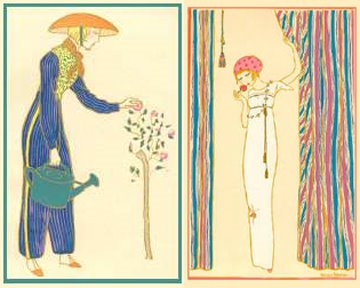
During this period fashion illustration became an art form in its own right and Poiret's work was enhanced by the work of Paul Iribe and Georges Lepape and others who produced beautiful images that captured not just the clothing but a particular way of life -- full of romance, leisure, langor, and style.


Resources
Orientalism and Fashion
Art Deco fashion illustration
Fox Rare Books : fashion illustration
Gazette du Bon Ton fashions at victoriana.com

the ballet russe

The Ballet Russe's arrival in France profoundly influenced all art forms but it had an especially dramatic and visible impact on fashion. Serge Diaghilev (1872-1929) formed the Ballet Russe in 1909, and they performed in Paris nearly every year until 1929 when the company was disbanded. Parisians were enthralled by performances by dancers such as Anna Pavlova and Vladimir Nijinsky in compositions by composers such as Nicolas Rimsky-Korsakov, Igor Stravinsky and Claude Debussy.

The company's first choreographer, Michel Fokine, brought an expressive and more natural style to the staid technique-obsessed world of ballet, which was loosing audiences who were more excited by the "free dance" movement that broke free of the rigid formalism of ballet.

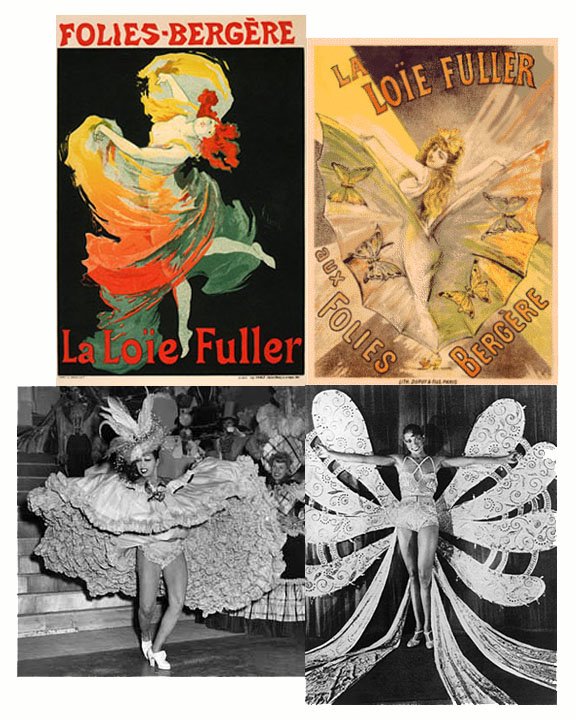
Click here for a brief explanation of "free dance," "modern dance" and its connection to dancers at the Folies Bergere.

In its first season it performed Cleopatra -- one of the "oriental operas" but it was its second season’s performance of Scherzerezhade that particularly captured the imagination of the public. As important as the dance and music was the impact of the set and costume designs done by the Russian Artist Leon Bakst.
The exotic themed ballets of the Ballet Russe and Leon Bakst's vivid and innovative costumes sparked a fascination with fashion inspired by the Middle East--or, their fantasies of the East.

Click here for a brief introduction to the concept of "orientalism."

It is significant that this fashion inspiration came from the ballet because, as I discussed earlier, the designers were creating clothing for a "new woman" who was energetic, active and--often dancing herself. These costumes were designed to allow the body to move and to emphasize its movements.

Europeans were captivated by art and design that evoked notions of the "folk" or "primitive" or "exotic." During the 1880s and 1890s with the Art Nouveau style explored these themes and continued into the 1920s with Art Deco, which incorporated ideas from the early avant-garde movements such as Cubism. The Ballet Russe was an essential part of this phenomenon and was a significant link between these two aesthetics movements, which can all be seen as facets of La Belle Époque!

Perhaps nowhere were these connections more evident than in the world of fashion and, especially in the designs by Paul Poiret. Poiret opened his salon in 1903 and was experimenting with Eastern-influences fabrics and styles before the arrival of the Ballet Russe in 1909. Yet the combination of the two produced a fashion phenomenon.

Click here for a brief introduction to some of the fashion designs of Paul Poiret.

Resources

Diaghilev's Ballets Russes -- biographies, ballet descriptions and a chronology of all of their performances in Paris
Ballet Russe and the Dance Revolution
An online exhibit on Ballet Russe costumes
More Leon Bakst costume designs
Russian Orientalism and the Ballet Russe by Laurel Victoria Gray (article)

josephine baker and modern dance history

A brief foray into dance history order to point out why the popular version of the history of modern dance is wrong because it leaves josephine baker out of the story . . .

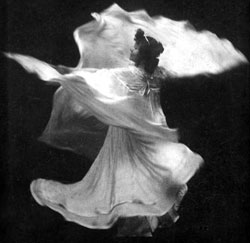
Three American women dancers--Loie Fuller, Isadora Duncan, and Ruth St. Denis--radically transformed dance as a creative form, breaking the ground that led to the development of American modern dance.


(Above: Loie Fuller, Ruth St. Denis, Isadora Duncan)

Loie Fuller and Ruth St. Denis emerged from vaudeville traditions, and Fuller, like Josephine Baker later, starred in the Folies Bergere where she was famous for her "serpentine dance" and "fire dance".

In the conventional story of the development of modern dance Baker is often not mention in the conventional story about the development of modern dance.

One reason for this is that dance history is often overly categorized and thus different strands that are important to each other are separated from each other: classical, concert, popular, ballroom, swing, jazz, folk, burlesque. Modern dance, like the other arts in the early twentieth century, drew from all of these sources and more, such as attempts to reimagine the dances of ancient Greece, folk dances of Eastern Europe, and dance from cultures around the world including Persia, Egypt, not to mention African and the Caribbean dances which were already at the core of popular American dance.
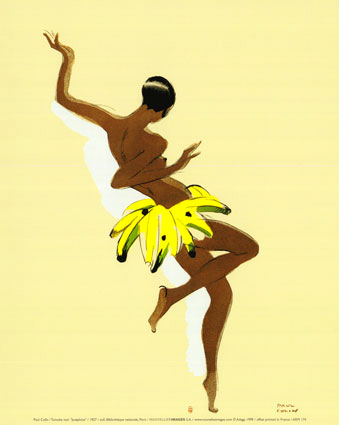
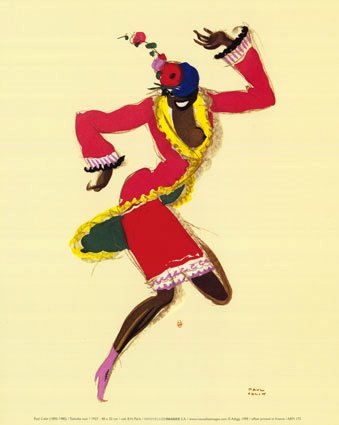
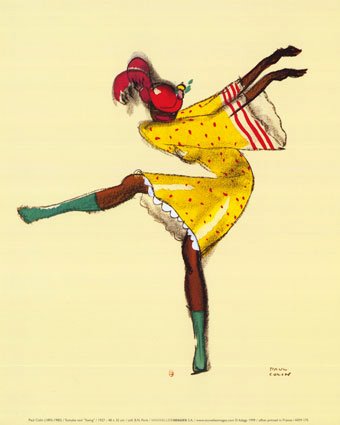
Baker -- like Fuller -- was most famous for her roles in burlesque forms of dancing. Baker was particularly constrained by the roles and even choreography that was created for her. She routinely "forgot" the steps and substituted her own choreography--which was a more accurate representation of African American dance styles as opposed to the French fantasies developed for audiences possessed by fantasy stereotypes of the erotic African woman: the primitive. She may not have been able to escape the stereotypes she was required to perform, but within those constraints she is considered an artist who was extraordinarily innovative -- and unquestionably skilled.


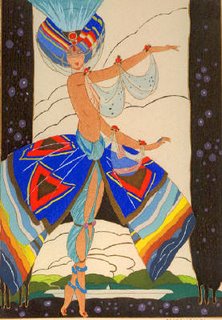
(artwork by paul collins)

Twentieth century concert dance is concerned with reworking of dance traditions and Baker was a key figure in the process that led to the understanding of African diaspora dance as an art form to be taken as seriously as ballet. Josephine Baker is important to the development modern concert dance not in spite of her being a popular entertainer but because of her extraordinary innovations as a popular dancer.

Note: I know that Baker is not the first, the last, or the only person who has been left out of the mainstream story of dance. Dance emerges from so many different places and, along with music, it spreads so quickly through the wider culture. I encourage you to suggest more.